
- Home
- CNC Machining
- Prototyping for consumer product development: choosing the right process
Prototyping for consumer product development: choosing the right process
Consumer product development puts demands on prototyping that other sectors don’t. The parts need to look right as well as work right. Timelines are often driven by external events – investor presentations, retail buyer meetings, trade shows – rather than internal programme milestones. And the journey from first sketch to production tooling involves more distinct stages, with different requirements at each one, than most engineers outside the sector realise.
Choosing the wrong process at any of those stages costs time and money. Choosing the right one – and knowing when to move from one to the next – is what keeps a development programme on track.
This guide covers the main prototyping processes available for consumer product development, when each is appropriate, and how to think about the transition from one stage to the next.
The stages of consumer product development – and what each needs from prototyping
Consumer product development typically moves through several distinct phases, each with different prototyping requirements.
Concept and form exploration. The priority is speed and geometry. Parts need to represent the size, shape and proportion of the product – enough to evaluate the design, test ergonomics informally and make decisions about direction. Material properties are secondary. Multiple iterations are likely.
Presentation and stakeholder review. Parts need to look finished enough to generate confidence – with investors, with retail buyers, with senior stakeholders.
Surface quality, colour and finish become important. A part that functions well but looks rough can undermine the product’s credibility at a critical moment.
Functional testing and user evaluation. Parts need to behave as the design intends – mechanically, ergonomically and in terms of material feel. User testing with representative parts generates better data than testing with parts that feel noticeably different to the production product.
Pre-production validation. Parts need to be as close to production intent as possible, in production-representative materials and quantities large enough to test assembly, packaging and the supply chain. This is where vacuum casting and, increasingly, injection moulding come in.
Pilot production. Low-volume runs in production processes and materials, for market evaluation, retail samples and initial sales.
SLA 3D printing: the workhorse of consumer product prototyping
Stereolithography is the process most consumer product teams reach for first – and for good reason. It produces accurate, smooth-surfaced resin parts that take finishing well, in a range of sizes and materials.
When SLA is the right choice
- Concept models and form studies where surface quality and dimensional accuracy matter
- Housing and enclosure models for design review – our SLA 750 machine accommodates parts up to 750 x 650 x 550 mm, large enough for most consumer product enclosures in a single build
- Presentation models that will be painted, lacquered or vacuum metallised
- Ergonomic evaluation parts where the shape and weight of the prototype need to be close to the production product
- Parts with snap fits, living hinges and complex assembly details that need to be tested before tooling is committed
Finishing options available on SLA
SLA parts take finishing particularly well. Options include primer and paint to Pantone or RAL colour match, gloss or satin lacquer, textured surface finishes, rubberised soft-touch coating, and vacuum metallising for decorative metallic parts. See full finishing options →
The trade-off
SLA resins are not structural materials. Parts produced for mechanical testing – particularly impact or fatigue testing – are better served by SLS or CNC machining. SLA parts can also be sensitive to UV exposure over time, which is worth considering for parts that will be on display for extended periods.
PSLA 3D printing: finer surface quality for smaller parts
Projection stereolithography uses a different optical system to standard SLA, producing parts with a very fine layer resolution. For smaller consumer product components – buttons, bezels, detail parts – where surface quality is critical and build lines from standard SLA would be visible even after finishing, PSLA is worth considering.
When PSLA is the right choice
- Small consumer product components where surface finish on the as-built part needs to be as fine as possible
- Detail parts that will be photographed or presented at close range
- Parts where the geometry is too small or detailed for standard SLA to resolve cleanly
The trade-off
PSLA build volume is smaller than large-format SLA, so it’s suited to smaller components rather than full product housings. For larger parts, standard SLA with appropriate finishing remains the better route.
SLS 3D printing: functional parts and enclosures, fast
Selective laser sintering produces functional nylon parts without tooling or support structures, making it well-suited to the internal structures, enclosures and mechanical assemblies that sit inside consumer products.
When SLS is the right choice
- Enclosures and internal structural components where mechanical performance matters as well as appearance
- Parts with complex internal geometry – snap features, cable routing channels, integrated brackets – that would be expensive or impossible to machine
- Functional test parts needed quickly – overnight dispatch is available for SLS
- Coloured parts for product review or user testing – SLS parts can be dyed and lacquered for a more finished appearance
The trade-off
SLS parts have a slightly grainy surface texture as-sintered. With dyeing and lacquering, the result can be very presentable, but for parts where a smooth, paint-ready surface is required from the outset, SLA is a better starting point. SLS is also constrained to nylon-based materials, which limits options where specific mechanical properties or material feel are required.
DLP 3D printing: flexible and specialist material options
Digital Light Projection offers a range of materials not available in SLA or SLS – including flexible elastomeric grades, flame-retardant materials and standard rigid resins. For consumer products with soft-touch or flexible components, DLP can produce those parts directly rather than requiring a separate vacuum casting step.
When DLP is the right choice
- Flexible consumer product components – grips, seals, gaskets, soft-touch buttons – that need to be evaluated in a flexible material at the prototype stage
- Parts requiring flame-retardant material grades for powered consumer products
- Rigid parts where a range of material properties is needed within a single programme
The trade-off
DLP parts can show visible layer lines at certain orientations, which may require post-processing for a smooth surface finish. Dimensional accuracy is good but sits between SLA and micro 3D printing in terms of fine feature resolution. As with SLA, DLP resins are not structural materials, so parts intended for mechanical testing are better served by CNC machining or SLS.
CNC machining: metal components and functional test parts
CNC machining is the right route when a consumer product includes metal components, when dimensional accuracy on a critical feature matters, or when a part needs to be tested mechanically in a material that represents production intent.
When CNC machining is the right choice
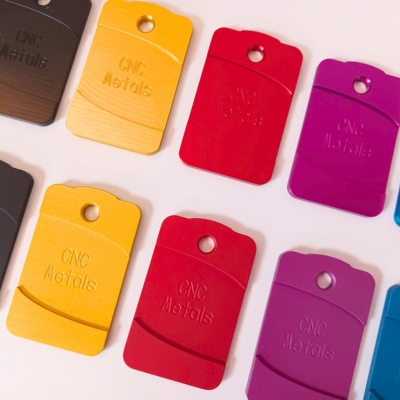
- Metal components within consumer products – aluminium chassis parts, buttons, hinges, decorative inserts
- Functional test parts where material properties need to match or represent the production specification
- Parts with tight tolerances on assembly interfaces – where a 3D printed part would introduce too much variability
- Jigs and fixtures for assembly and testing
The trade-off
CNC machining is the most constrained process geometrically. Complex organic forms, thin walls and internal channels that are straightforward in additive manufacturing can be difficult or expensive to machine. For consumer products with complex external geometry, SLA is typically the better route for the housing; CNC for the functional components inside it.
Vacuum casting: production-representative parts in small batches
Vacuum casting produces small batches of polyurethane parts using silicone moulds made from a master pattern. It’s one of the most valuable processes in consumer product development – producing parts that look and feel close to production-moulded components, in quantities large enough for meaningful user testing and retail evaluation.
When vacuum casting is the right choice
- User testing and focus group samples where material feel, weight and appearance need to represent the production product
- Retail buyer samples – small quantities of presentation-quality parts before production tooling is committed
- Investor and stakeholder demonstration models in production-representative materials
- Products with overmoulded components – soft-touch grips, ergonomic handles, two-material assemblies – where the overmoulding needs to be evaluated before tooling
- Pre-production batches for assembly trials and packaging evaluation
Vacuum cast parts are available in a wide range of polyurethane grades, from soft elastomers simulating TPE through to rigid materials simulating ABS, polypropylene and nylon. Parts can be produced in colour, and overmoulding is available.
Read more about vacuum casting for consumer products →
The trade-off
Vacuum casting requires a master pattern as a first step – typically an SLA part finished to the required standard – which adds a stage and some lead time for single-part requirements. The silicone tooling has a life of around 20 to 25 shots, so for larger volumes, injection moulding becomes more economical.
Injection moulding: pilot production and beyond
For consumer products heading toward volume manufacture, injection moulding is the production process. The transition from prototyping to moulded parts is a significant step – in cost, lead time and design commitment – and it’s worth thinking about it earlier in development than feels necessary.
When injection moulding is the right choice
- Pilot production runs in production-intent materials for market evaluation and retail launch
- Pre-production builds for assembly and supply chain trials
- Products that have been validated through prototyping and are ready for tooling commitment
Tool options
Aluminium tooling is faster and less expensive to produce than steel, making it appropriate for lower volumes and programmes where design changes are still possible. Pre-toughened steel (P20) tooling is more durable and suitable for longer production runs. Our team can advise on the right tool specification for your programme at the quoting stage.
The trade-off
Tooling is a significant cost and lead time commitment. The design should be stable – validated through functional prototyping and user testing – before tooling commences. Vacuum casting is the recommended bridge between prototype validation and tooling commitment for most consumer product programmes.
How processes combine across a typical development programme
Most consumer products use several processes across the development cycle. A typical pattern:
- Concept stage: SLA for form exploration and presentation models; PSLA for fine detail parts; SLS for internal structural components
- Functional and user testing: SLS for structural assemblies; DLP for flexible components; CNC machining for metal parts and functional test components
- Pre-production evaluation: Vacuum casting for production-representative batches, user testing samples and retail buyer sets
- Pilot production: Injection moulding in production-intent materials
Having the same supplier cover all of these stages reduces the risk of programme knowledge being lost between handovers – and simplifies the conversation when requirements change, as they always do.
Not sure which process is right for your stage?
The answer often depends on what the part needs to do next, not just what it needs to be now. Our team is used to working through these decisions with product teams and designers at the quoting stage.
Call us on 01763 249760, email office@prototypeprojects.com, or request a quote and tell us where you are in the programme. We’ll recommend the right approach and give you clear, fast pricing.
Related reading
- Surface finish and colour in consumer product prototypes: what’s achievable and how to specify it →
- Vacuum casting for consumer products: production-quality parts without production tooling →
- Consumer Products sector page →
- SLA 3D Printing at Prototype Projects →
- Vacuum Casting at Prototype Projects →
- Injection Moulding at Prototype Projects →
From prototype to low-volume production in industrial ...
20 October 2026 Comments Off on From prototype to low-volume production in industrial automation
Which 3D printing process should you choose?
14 October 2026 Comments Off on Which 3D printing process should you choose?
SLS 3D printing for jigs, fixtures and ...
12 October 2026 Comments Off on SLS 3D printing for jigs, fixtures and robotic grippers
Prototyping for automation and industrial engineering: choosing ...
15 September 2026 Comments Off on Prototyping for automation and industrial engineering: choosing the right manufacturing process
Vacuum casting for consumer products: production-quality parts ...
20 August 2026 Comments Off on Vacuum casting for consumer products: production-quality parts without production tooling


Prototyping for Medical Device Development: Choosing the ...
28 July 2026 Comments Off on Prototyping for Medical Device Development: Choosing the Right Process