
- Home
- CNC Machining
- Prototyping for Medical Device Development: Choosing the Right Process
Prototyping for Medical Device Development: Choosing the Right Process
Medical device development rarely follows a straight line. A concept model becomes a functional prototype, which becomes a test part, which eventually becomes a pilot production component – and at each stage, the requirements change. The material that was fine for early ergonomic evaluation won’t necessarily work when the part needs to go near a patient. The process that gave you fast geometry iteration at concept stage may not deliver the dimensional accuracy you need for a design verification build.
Choosing the right process at each stage is one of the decisions that separates development programmes that run smoothly from those that generate avoidable delays and rework.
This guide is written for engineers and product development leads working on medical devices and life sciences equipment. It covers the main prototyping processes available – SLA, micro 3D printing, CNC machining, SLS, DLP, and vacuum casting – and when each is the right call at different points in a development programme.
Start with the stage, not the process
Before comparing processes, it helps to be clear about what the part needs to do at this specific point in development. A part for a concept review has different requirements from one going into a clinical validation build.
Concept and ergonomic evaluation At this stage, the priority is speed and geometry. Parts need to represent the form, feel and size of the device – not necessarily its final material properties. A wider range of processes and materials is appropriate here.
Functional testing Parts need to behave mechanically as the design intends. Material properties start to matter: stiffness, flexibility, surface hardness, resistance to cleaning agents. Process choice narrows.
Patient contact and clinical use Where parts will come into contact with the body – even temporarily – material biocompatibility becomes a requirement, not a consideration. USP Class VI capability or ISO 10993 test data may be needed depending on the application and the regulatory pathway being followed.
Design verification and design validation Parts need to be representative of production intent. Dimensional accuracy, traceability and documentation become important. Inspection reports may be required alongside parts.
Pilot production Low-volume runs in production-intent materials and processes. Injection moulding becomes relevant for plastic components heading toward volume manufacture.
SLA 3D printing: fast, accurate, and USP Class VI capable
Stereolithography produces resin parts with a smooth surface finish, good dimensional accuracy and a range of material options, making it one of the most versatile processes across the medical device development cycle.
When SLA is the right choice
- Concept models and ergonomic evaluation parts where surface quality and dimensional accuracy matter
- Device housings, enclosures and system mock-ups for early evaluation
- Fluid flow and visualisation models where optical clarity is required
- Patient contact prototype parts, where Accura ClearVue – a USP Class VI capable resin – is specified
- Large components – our SLA 750 machine accommodates parts up to 750 x 650 x 550 mm
For patient contact applications: Accura ClearVue is USP Class VI capable, water-clear, humidity and moisture stable. It produces rigid, strong parts suitable for limited contact with the body. Parts produced for patient contact are handled, cleaned and packaged to a strict protocol. No post-processing operations are available on USP Class VI parts – which is worth factoring into design decisions early.
The trade-off
SLA resins are not structural materials. They are well-suited to evaluation, fit checks and functional testing at moderate loads – but for parts that will be mechanically stressed in testing, CNC machining is likely a better fit. SLA parts can also be sensitive to prolonged UV exposure, which is worth considering for parts stored or used in bright environments.
Micro 3D printing: biocompatible resin for small, detailed components
Micro 3D printing produces parts with feature resolution down to micro scales – a capability that is particularly relevant in medical device development, where components are often small, geometrically complex, and subject to biocompatibility requirements.
When micro 3D printing is the right choice
- Drug delivery device components where small features, fine details and thin walls are required
- Surgical instrument details and small mechanism parts
- Diagnostic device features and microfluidic-adjacent components
- Applications requiring a biocompatible, sterilisable material – BIO resin has passed six ISO 10993 biocompatibility tests and is suitable for non-implantable medical applications
- Parts where standard 3D printing resolution is insufficient for the feature detail required
The BIO material in practice: BIO is a rigid resin (84 Shore D, tensile strength 56 MPa) with low water absorption and a heat deflection temperature of 85.7°C. It can be sterilised and has passed ISO 10993 tests covering skin irritation, sensitisation, cytotoxicity, pyrogenicity, acute systemic toxicity and in vitro hemolysis. For small medical device components that need biocompatibility credentials, it is a strong option at the prototype stage.
The trade-off
Micro 3D printing is constrained by build volume – it is suited to small parts, not housings or structural assemblies. Lead times are longer than standard 3D printing processes, with a minimum of three working days. And as with all additive processes, wall thickness and feature orientation need to be considered at the design stage.
CNC machining: functional testing in real engineering materials
CNC machining produces parts in real engineering materials to tight tolerances – which is what makes it the right choice when functional performance in testing matters, or when the production design calls for metal or high-performance polymer components.
When CNC machining is the right choice
- Functional prototypes that will be mechanically tested – load tested, fatigue tested or used in assembly trials
- Parts in PEEK, where high-temperature performance, chemical resistance and biocompatibility are required
- Stainless steel 316 components where corrosion resistance is a requirement
- Parts with tight tolerances – ±0.1 mm is achievable as standard, tighter on specific features
- Test fixtures, jigs and assembly tools for development and verification programmes
- Parts where dimensional accuracy needs to be verified and documented
Material highlights
PEEK is widely specified in medical devices for its combination of high-temperature resistance, excellent chemical resistance, low moisture absorption and inherent biocompatibility. Stainless steel 316 offers good corrosion resistance and is suitable for instrument components and mechanical interfaces. Acetal is dimensionally stable, low friction and commonly found in diagnostic and laboratory equipment.
The trade-off
CNC machining is constrained by geometry in ways that additive processes are not. Complex internal channels, organic forms and fine surface features may not be achievable from billet, or may add significantly to cost and lead time. If a part has geometry that would be difficult to fixture and machine, it is worth discussing whether an additive process can meet the functional requirements instead.
SLS 3D printing: functional nylon for equipment and enclosures
Selective laser sintering produces functional nylon parts without tooling, with no support structures required during the build. This makes it well-suited to complex geometries and internal features that would be difficult or expensive with CNC.
When SLS is the right choice
- Housings and enclosures for diagnostic instruments and laboratory equipment
- Internal structural components, brackets and cable management within medical equipment assemblies
- Parts with complex internal geometry or assembled-in-place features
- Batches of functional test parts needed quickly – overnight dispatch is available
The trade-off
SLS parts have a slightly grainy surface texture as-sintered. Dimensional accuracy is good but not at the level of CNC machining. SLS is also constrained to nylon-based materials, which limits options where specific mechanical properties or biocompatibility credentials are required.
DLP 3D printing: material options for specific performance requirements
Digital Light Projection offers a range of materials including flexible, flame-retardant and high-temperature grades – useful for device components where standard resin properties are insufficient.
When DLP is the right choice
- Flexible components such as seals, grips and over-moulded features in prototype assemblies
- Parts requiring flame-retardant grades for powered medical equipment housings
- Components requiring higher temperature resistance than standard SLA resins
The trade-off
DLP parts can exhibit visible layer lines at certain orientations, which may require post-processing to achieve a smooth surface finish – worth considering for any part where appearance is part of the evaluation. Dimensional accuracy is generally good but sits between SLA and micro 3D printing in terms of fine feature resolution. As with SLA, DLP resins are not structural materials, so parts intended for mechanical testing are better served by CNC machining or SLS.
Vacuum casting: small batches of representative evaluation parts
Vacuum casting produces small batches of polyurethane parts using silicone tooling made from a master pattern. It sits in a useful middle ground for medical device development – more representative of production-intent materials than most 3D printed parts, without the cost and lead time of hard tooling.
When vacuum casting is the right choice
- Batches of ergonomic evaluation or usability study parts where material feel matters
- Parts that need to represent the properties of a soft or flexible production material – elastomeric grips, seals, overmoulded features
- Small production runs where injection moulding tooling is not yet warranted
- Device assemblies where multiple variants of the same component are needed for comparison
The trade-off
Vacuum casting requires a master pattern as a first step, which adds lead time for single-part requirements. The silicone tooling has a limited life of around 20 to 25 shots. For larger volumes, injection moulding becomes more economical.
A note on inspection and documentation
Whatever process is used, dimensional inspection and inspection reports are available alongside your parts. For medical device development programmes where design verification and design validation require documented evidence of dimensional compliance, this means the paperwork is in place from the start rather than retrospectively assembled.
If your programme has specific documentation requirements – drawing references, GD&T callouts, calibration references – raise these at the quoting stage.
How processes combine across a development programme
Most medical device programmes use more than one process. A typical pattern might look like this:
- Concept stage: SLA for overall geometry and form evaluation; micro 3D printing for small detailed components
- Functional testing: CNC machining for parts that will be load-tested; SLS for housings and structural assemblies
- Patient contact build: SLA in Accura ClearVue (USP Class VI capable); micro 3D printing in BIO for small components
- Design verification: CNC machining with inspection reports; SLA for non-structural assemblies
- Pilot production: Injection moulding in production-intent materials
Having a supplier who can cover all of these under one roof – without the programme knowledge being lost between stages – is a genuine advantage as a development programme progresses.
Ready to start your project?
That is a common question, particularly at transition points between development stages. Our team is used to working through process selection with engineers at the quoting stage – if you are not certain, tell us what the part needs to do and where you are in the programme. We will recommend the right approach and give you clear, fast pricing.
Call us on 01763 249760, email office@prototypeprojects.com, or request a quote and include a note.
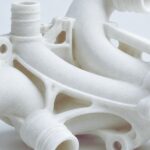
Which 3D printing process should you choose?
14 October 2026 Comments Off on Which 3D printing process should you choose?
SLS 3D printing for jigs, fixtures and ...
12 October 2026 Comments Off on SLS 3D printing for jigs, fixtures and robotic grippers
Prototyping for automation and industrial engineering: choosing ...
15 September 2026 Comments Off on Prototyping for automation and industrial engineering: choosing the right manufacturing process
Vacuum casting for consumer products: production-quality parts ...
20 August 2026 Comments Off on Vacuum casting for consumer products: production-quality parts without production tooling
Surface finish and colour in consumer product ...
14 August 2026 Comments Off on Surface finish and colour in consumer product prototypes: what’s achievable and how to specify it

Prototyping for Medical Device Development: Choosing the ...
28 July 2026 Comments Off on Prototyping for Medical Device Development: Choosing the Right Process