- Home
- Digital Light Projection
- Which 3D printing process should you choose?
Which 3D printing process should you choose?
A housing for assembly testing, a clear component for observing fluid flow and a jig for the workshop have different requirements. Choosing the right 3D printing process starts with what your part needs to do.
Does it need to withstand repeated handling? Show the appearance of a finished product? Include small, detailed features? Work at elevated temperatures?
At Prototype Projects, SLS, SLA, PSLA and DLP provide different routes to prototype and low-volume parts. This guide helps you identify where to start.
Need functional nylon parts? Start with SLS
For parts that need strength, stiffness and durability, Selective Laser Sintering (SLS) is a useful starting point.
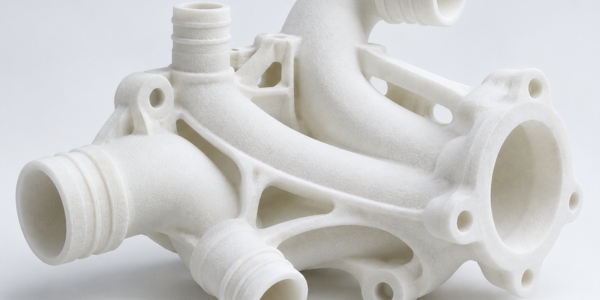
Applications include functional prototypes, housings, assembly aids, jigs, fixtures and grippers. It’s also worth considering for complex components that would be difficult to produce by conventional methods.
Our SLS material is PA 2200 CarbonReduced (Matrix PA12 CR), a nylon suited to functional testing and, where the application allows, end-use parts.
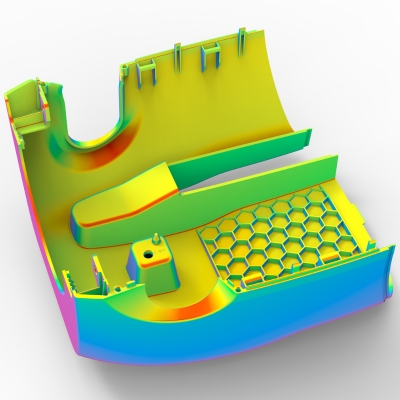
For example, an enclosure used to assess assembly and handling may benefit from SLS. If its main purpose is a finished product presentation, a resin process may be more appropriate.
The intended loads, operating environment and finish should guide the decision.
Need smooth visual prototypes? Consider SLA
When appearance and surface quality matter, Stereolithography (SLA) is a strong option.

SLA produces detailed resin parts with smooth surfaces, making it useful for visual models, product presentations and prototypes used to assess form and fit. Additional finishing can help represent the intended product appearance.
It also provides a route to master models for Vacuum Casting, connecting an initial prototype with a later batch of cast parts.
Material choice matters here too. A prototype intended to demonstrate appearance may need different properties from one used for functional testing.
Need a large component? Check SLA size and material together
For a large housing, cover or presentation model, the available build size can influence your choice.
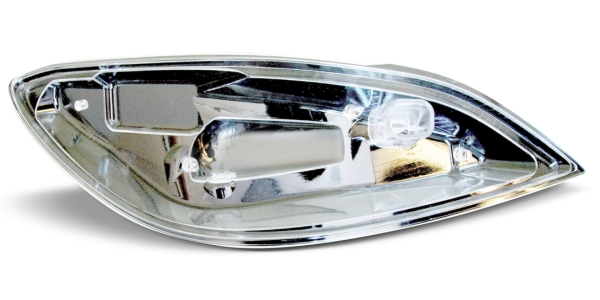
Our SLA 750 offers a build volume of 750 × 750 × 550 mm, using Accura ClearVue (Matrix Clear). This opens up opportunities for large components, subject to geometry, orientation and finishing requirements.
That capacity is specific to the machine and material combination. Other SLA materials have different available build sizes, so it is worth discussing both requirements together.
Compare SLA materials and build sizes →
Need clear parts? Start with the viewing requirement
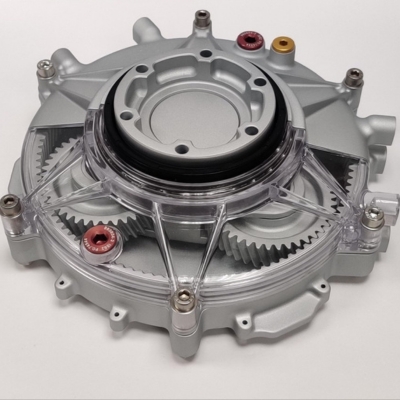
Clear prototypes can help demonstrate internal features, inspect an assembly or observe fluid flow.
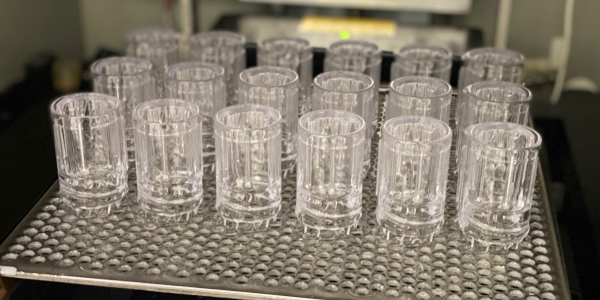
Accura ClearVue (Matrix Clear) is our clear SLA material. The right finish depends on what you need to see through the component and how it will be used.
Tell us whether you need general visibility, a presentation finish or a more demanding optical result. Geometry, surface access and finishing all need consideration when specifying a clear part.
Need functional resin parts or a short run? Consider PSLA
If you need a resin prototype for design verification, or a small batch of functional components, Projection Stereolithography (PSLA) is worth considering.
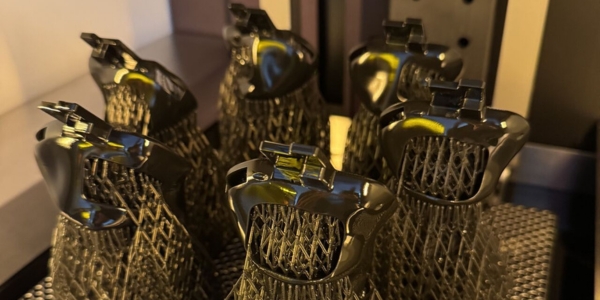
Typical applications include enclosures, housings, product development parts and short production runs where surface quality, speed and repeatability matter.
Our PSLA process uses PRO-BLK 10 (Matrix PB10), an engineering resin that produces stiff black parts with a high-quality surface finish.
For a small batch needed before committing to tooling, PSLA may provide a practical route. Suitability depends on the required material properties, part design and operating conditions.
Short runs can also suit SLS or DLP. The quantity helps shape the decision, but the part’s requirements determine which process belongs on the shortlist.
Need small, detailed parts? Consider DLP
For smaller components with detailed features, Digital Light Projection (DLP) offers an accurate resin printing route.
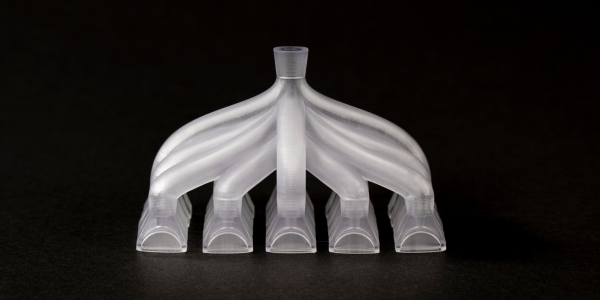
Our DLP build envelope is 124.8 x 70.2 x 196 mm. It’s useful for detailed visual models, functional prototypes and suitable low-volume components.
DLP also offers a broad material choice. If your part needs flexibility, toughness, rubber-like behaviour or a specialist thermal property, the material requirement may make DLP a useful option.
Highlight critical features when enquiring, so we can assess the design alongside the material and build requirements.
Need temperature resistance? Choose the material alongside the process
A high-temperature requirement needs more detail than a target temperature alone.
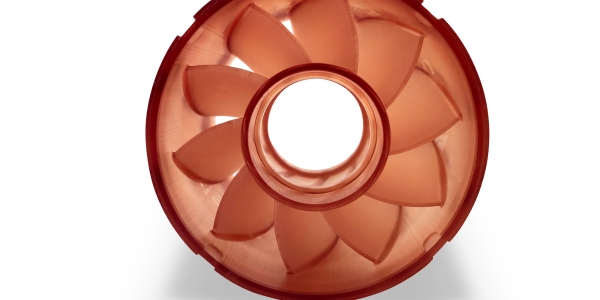
How long will the part be exposed? Will it carry a load? Which dimensions must remain stable?
Our SLA and DLP ranges include HI-TEMP 300 AMB, while DLP also offers HI-TEMP 150C FR Black for applications requiring a combination of thermal performance and flame retardancy.
Material datasheets provide the test conditions behind thermal figures. Share your actual operating conditions so we can help assess the most appropriate option.
Compare SLA materials and DLP materials →
Tell us what your part needs to achieve
To help select a process, send us your CAD file and explain:
- What the part will be used for
- The loads, temperatures and environment it will experience
- Any critical dimensions or small features
- The required appearance and finish
- How many parts you need and when you need them
You do not need to arrive with a process already selected. We can help you assess the options against your application.
Ready to get started?
Use Matrix for instant SLS, SLA and DLP quotes.
Need advice or a PSLA quote? Talk to our team on 01763 249760 about your project, or request a quote.
Which 3D printing process should you choose?
14 October 2026 Comments Off on Which 3D printing process should you choose?
Vacuum casting for consumer products: production-quality parts ...
20 August 2026 Comments Off on Vacuum casting for consumer products: production-quality parts without production tooling
Surface finish and colour in consumer product ...
14 August 2026 Comments Off on Surface finish and colour in consumer product prototypes: what’s achievable and how to specify it
Prototyping for consumer product development: choosing the ...
6 August 2026 Comments Off on Prototyping for consumer product development: choosing the right process
Materials for medical device prototypes: USP Class ...
4 August 2026 Comments Off on Materials for medical device prototypes: USP Class VI, ISO 10993 and what the standards actually mean

Prototyping for Medical Device Development: Choosing the ...
28 July 2026 Comments Off on Prototyping for Medical Device Development: Choosing the Right Process