
- Home
- 3D Printing
- 3D Printing vs CNC Machining: Which process should you choose?
3D Printing vs CNC Machining: Which process should you choose?
A housing for checking an assembly, a bracket for load testing and a model for a customer presentation may each need a different manufacturing route.
Both 3D printing and CNC machining can produce prototypes and low-volume components. Choosing between them means looking at the geometry, material, accuracy and performance your part requires, alongside quantity, finish and deadline.
At Prototype Projects, we offer both processes in-house. We can help you assess the options against what your part needs to achieve.
Start with the intended use
Before choosing a process, ask: what does this part need to demonstrate or do?
A model used to assess appearance and handling has different requirements from a component undergoing mechanical testing. A workshop fixture may need wear resistance and accurate locating features, while a presentation model may depend on colour and surface finish.
Consider whether you need to:
- Check form, fit or assembly
- Demonstrate appearance to customers or colleagues
- Test mechanical or thermal performance
- Support assembly, inspection or component handling
- Produce parts for an end-use application
These requirements provide the basis for comparing the processes.
Geometry: consider access as well as complexity
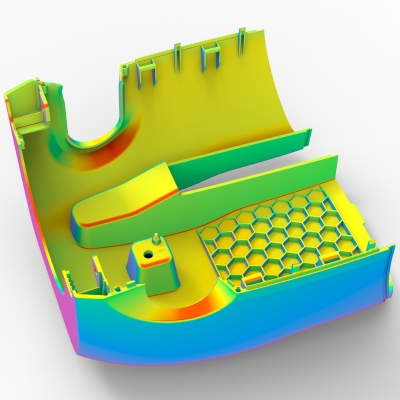
3D printing builds parts layer by layer. This makes it useful for intricate shapes, lightweight structures and features that are difficult to reach with a cutting tool. However, minimum feature sizes, support removal and access for cleaning still need consideration.
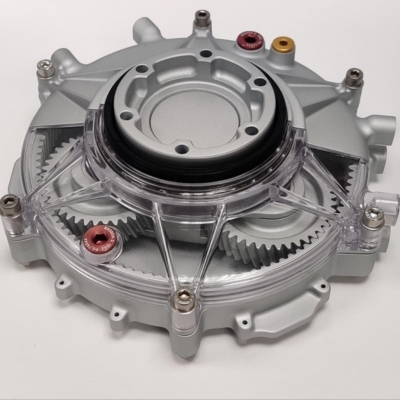
CNC machining removes material from solid stock. It can produce complex profiles and surfaces, including through multi-axis machining, but the cutting tool must be able to reach each feature. Deep pockets, narrow slots and internal corners can influence the design and machining approach.
For example, a complex nylon housing may suit printing, while a bracket with accessible holes and accurately located mounting faces may suit machining.
Our team can review your CAD file to assess what is practical. Explore our CNC milling capability.
Tolerance: identify the dimensions that matter
A prototype used to assess overall shape may allow more dimensional variation than a part with a bearing fit or accurately aligned mounting holes.
CNC machining generally suits tighter dimensional requirements. For 3D printing, achievable accuracy depends on the technology, material, geometry and build orientation.
Rather than applying the tightest possible tolerance everywhere, identify the features that control whether the part works. This could include a mating surface, hole position, shaft diameter or clearance between components.
Send a drawing highlighting those requirements alongside your CAD file. We can then assess the appropriate process and inspection needs before manufacture.
Find out more about CNC machining.
Materials: decide whether you need specific properties or a specific grade
If the prototype must be made in a specified metal or engineering plastic, material availability may guide the process choice.
CNC machining provides access to materials such as aluminium, stainless steel, acetal and acrylic. It can be particularly useful when testing needs to reflect the behaviour of a specified stock material.
3D printing offers a different range of options. At Prototype Projects, these include PA 2200 CarbonReduced nylon for SLS and engineering resins for SLA, PSLA and DLP.
Some resins simulate selected characteristics of familiar plastics. An ABS-like or polypropylene-like resin should be assessed against the properties needed for your test; it should not automatically be treated as equivalent to the production polymer.
Compare our CNC materials and 3D printing materials.
Surface finish: specify appearance and function
Surface finish can affect both how a part looks and how it performs.
For 3D printed parts, the starting finish varies with the process. SLA can provide smooth surfaces for visual prototypes, while SLS parts have a more textured surface. Depending on the process and material, additional finishing can include dyeing, painting, lacquering or build-line removal.
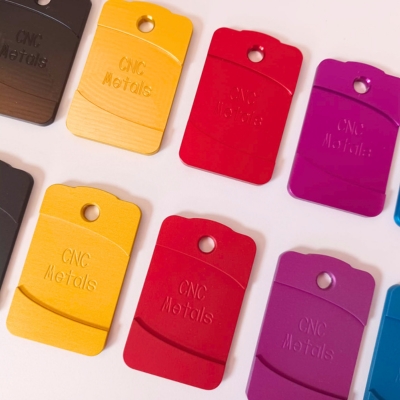
CNC machined parts may retain tool marks unless a further finish is specified. Options include vapour honing, polishing, painting and suitable treatments such as anodising for aluminium.
Explain which surfaces are visible, which contact other components and whether a coating could affect a critical fit. Include finishing in the initial brief so it can be considered alongside dimensions, cost and lead time.
Explore 3D printing finishes and CNC finishing options.
Quantities: compare the complete batch
Both processes can suit one-off parts and small batches. There is no fixed quantity at which every project should switch from printing to machining.
For printing, part size, build layout, material and finishing influence the cost of a batch. For machining, programming, workholding, cutting time and repeat setups all contribute.
A batch of small, complex parts may present a different comparison from the same quantity of simple machined components. Several design variants may also suit a different approach from a repeat order of identical parts.
Tell us the quantity you need now and whether further batches are likely. That allows us to assess the immediate requirement alongside potential repeat production.
Strength: match the material and process to the load
Both printed and machined components can be used for functional applications. Suitability depends on the material, design, manufacturing process and operating conditions.
For a printed part, build orientation and processing can affect performance. For a machined part, the specified material grade and stock condition remain important.
Describe how the component will be loaded and whether it will experience impact, repeated flexing, friction, heat or chemicals. A part that survives a short assembly trial may need different properties from one expected to operate repeatedly in service.
Material datasheets help establish a shortlist, while testing under representative conditions helps determine whether the finished component meets the application.
Speed: compare finished parts ready for use
The useful comparison is the time needed to receive a finished, usable part.
3D printing can support quick design iterations, although cleaning, curing and finishing must be included in the schedule. CNC machining can also provide a fast route where the material, geometry and required operations suit the available service.
We offer Overnight 3D Printing for eligible requirements and a 3-Day CNC service for qualifying parts. Additional finishing and inspection can extend lead times.
Share your deadline at the enquiry stage so we can confirm a realistic route.
Explore our 3-Day CNC service. Get an instant 3D printing quote via Matrix.
You can use both processes during development
The most useful route may change as your design develops.
For example, you might print an enclosure to assess its layout and handling, then machine a component in the specified material for a later test. An assembly could also combine a printed housing with machined shafts, brackets or locating parts.
Choosing a process for one stage does not commit the whole project to that method. Each part can be assessed against its role and the evidence you need from it.
Talk to us about your part
With both 3D printing and CNC machining in-house, we can help you choose a route based on your requirements.
Send us your CAD file, along with:
- Intended use and operating conditions
- Material requirements
- Critical dimensions and tolerances
- Surface finish
- Quantity and deadline
You do not need to select the process before contacting us. We can review the design and discuss the options with you.
Talk to our team about your project via 01763 249760 or office@prototypeprojects.com, or request a quote.
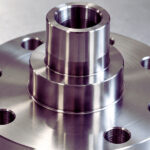
3D Printing vs CNC Machining: Which process ...
4 November 2026 Comments Off on 3D Printing vs CNC Machining: Which process should you choose?
From prototype to low-volume production in industrial ...
20 October 2026 Comments Off on From prototype to low-volume production in industrial automation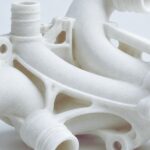
Which 3D printing process should you choose?
14 October 2026 Comments Off on Which 3D printing process should you choose?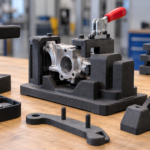
SLS 3D printing for jigs, fixtures and ...
12 October 2026 Comments Off on SLS 3D printing for jigs, fixtures and robotic grippers
Prototyping for automation and industrial engineering: choosing ...
15 September 2026 Comments Off on Prototyping for automation and industrial engineering: choosing the right manufacturing process


Prototyping for Medical Device Development: Choosing the ...
28 July 2026 Comments Off on Prototyping for Medical Device Development: Choosing the Right Process