
- Home
- Medical Devices
- Prototyping medical devices for patient contact
Prototyping medical devices for patient contact
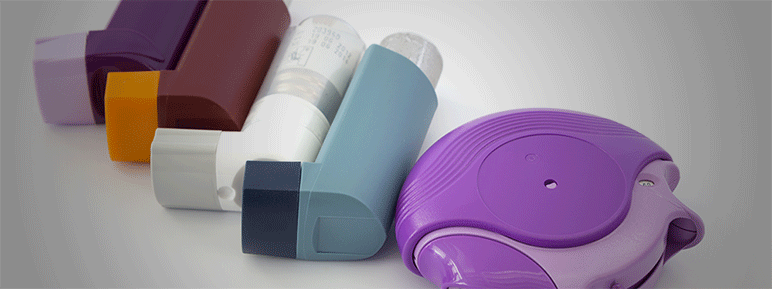
During the development of a medical or drug delivery device there comes a point when prototypes need to come into contact with patients. Devices or components for patient contact must be safe but it is not feasible to manufacture prototypes to the same rigorous standards of hygiene and cleanliness as production parts. On the other hand, conventional prototyping environments are likely to be inappropriate for producing parts with which patients will come into contact. How can development engineers solve this conundrum?
One option is to talk to Prototype Projects about our medical device prototyping capability. We have invested in a specialist medical prototyping cell within our 3D printing suite, with an SLA machine dedicated to the production of prototype components for medical and drug delivery devices. Our customers find this facility gives them the confidence they need when procuring prototype parts suitable for limited contact with the body.
Production capability
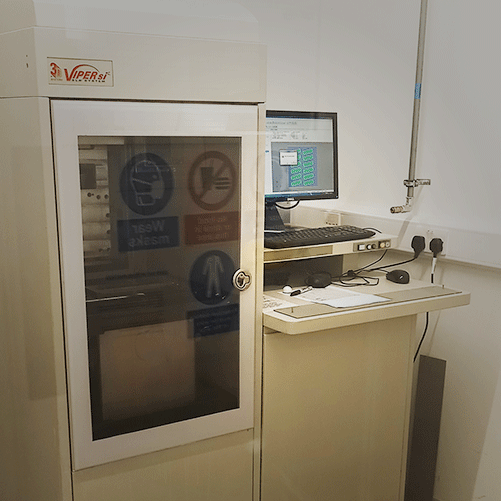
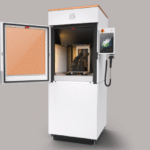
The medical device prototyping cell is fully enclosed and has its own air conditioning system. Medical prototype parts are produced in a 3D Systems Viper SLA machine with a build envelope of 250 x 250 x 250mm. This has proven to be a highly dependable machine benefiting from fine point scanning of 75µm for creating small detailed features and a smooth, high-quality surface finish. Thin walls can be produced and tight tolerances held. All of these points make the Viper an excellent system for 3D printing prototype parts for medical devices.
SLA machines can operate with a broad choice of materials for general prototyping work but we only use Accura ClearVue resin for medical device prototyping because it has been tested for USP Class VI use. Accura ClearVue’s properties are similar to those of clear polycarbonate: printed parts are rigid, tough, moisture-stable, virtually water-clear and can be produced with high-quality surfaces. Depending on the adjacent components within an assembly, parts 3D printed from Accura ClearVue can feature snapfits or they can be bonded using appropriate adhesives. If threaded fasteners have been specified, Accura ClearVue parts can be 3D printed with holes for tapping or have inserts installed, all in accordance with procedures agreed with the customer. Another option we offer for medical prototypes is silicone cast onto 3D printed parts to create integral seals. Again, the procedure is first agreed with the customer.
As with any 3D printing project, we can discuss the optimum build orientation with customers to ensure the parts function as required. We never orientate parts for reasons of speed or cost, as we know how important it is that they perform correctly – particularly for medical or drug delivery devices that will be in contact with patients.
Cleanliness
To help maintain cleanliness in the medical prototyping cell, we have a strict protocol to restrict access while work is in progress. Limiting the number of people present and how often the cell door is opened minimises the risk of contamination and temperature fluctuations. Furthermore, finished parts do not leave the cell until they have been bagged, sealed and labelled to show what the parts are and that they have been produced in our specialist medical prototyping facility.
When we receive an order for a medical device prototype, we process it in line with our ISO 9001 Quality Assurance procedures. Full confidentiality is maintained at all times, with part files stored on site on our own server and encrypted backups stored in the Cloud. If we have any queries on the part design, our engineers liaise with the customer by email, telephone or video call as appropriate to ensure the part we produce is exactly what the customer expects to receive. The customer’s part file is then pre-processed before being downloaded to the Viper SLA machine for production. Our prototyping machines operate round the clock, typically running unattended overnight so we can keep turnaround times as short as possible. Furthermore, the SLA machine in the medical device prototyping cell is equipped with a webcam so we can monitor progress without entering the room.
Once the build process is complete, parts are cleaned following a procedure we developed in-house, incorporating the manufacturer’s cleaning guidelines, yet suitable for use on parts that will have limited contact with patients. Part handlining is kept to the bare minimum, so the usual finishing options of sanding, lacquering or painting are not available on parts produced in our medical prototyping cell.
Because of the additional quality control procedures applied when producing medical or drug delivery device prototype parts, we do not offer the same Express service as we do for other prototyping work. However, we quote lead times that are as short as possible without compromising on part quality or the high QA standards applied when producing medical parts.
Related prototyping technologies
The medical device prototyping cell is ideal for parts that are required to have limited contact with the body but a medical or drug delivery device usually comprises multiple components, only a small number of which are for patient contact. Depending on the customer’s requirements, we can produce additional prototype components for the same device using our other in-house technologies. These include SLS, DLP, FDM, Polyjet 3D printing, vacuum casting, laser cutting, and CNC machining of plastics and metals. Complementing these technologies, we offer a full spectrum of finishing options and in-house assembly – but only for those parts that will not be in contact with patients, of course.
We opened our medical prototyping facility in 2016 and have since been busy supporting customers in the Life Sciences and medical device development industries, both locally in the Cambridge area and further afield. Even before we opened the dedicated medical cell, we had been serving customers in this sector, albeit with the focus on prototyping ‘non-contact’ parts.
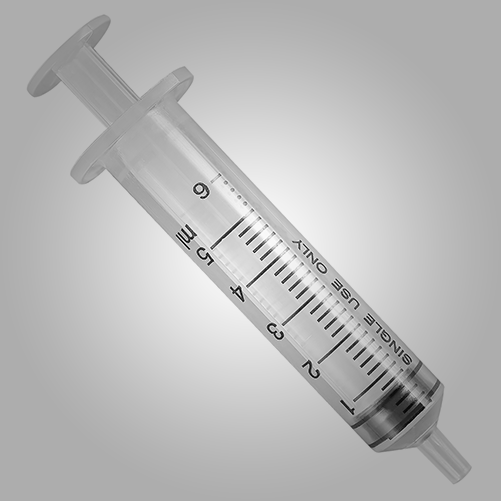
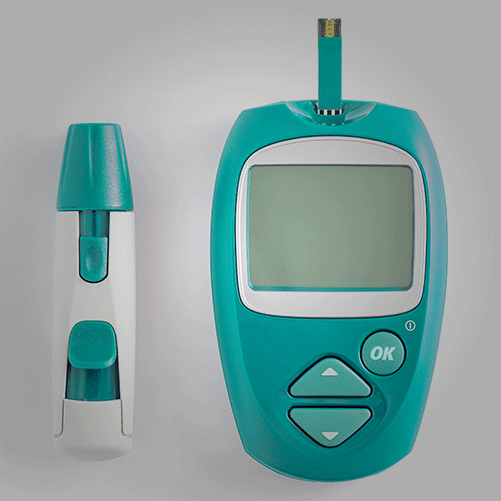
Our extensive experience means we understand the issues and can work with customers to create the high-quality parts they need, often at short notice. In most cases we are not told what the parts are for, but we do know that some have been destined for ergonomics and usability studies, as well as Phase 1 and Phase 2 clinical trials. Usually customers order one-offs, but sometimes small quantities are required or multiple variants of the same component to enable comparisons to be made. And occasionally we are asked for larger numbers of parts.
Talk to us
Whatever your need for prototype parts for medical and drug delivery devices, talk to us on 01763 249760 to find out how our services and expertise can help you achieve your goals.
PSLA vs SLA vs DLP | Resin ...
18 March 2026 Comments Off on PSLA vs SLA vs DLP | Resin 3D Printing Comparison
New Larger CNC Billet Expands 3-Day and ...
10 March 2026 Comments Off on New Larger CNC Billet Expands 3-Day and Production Capacity
Stainless Steel 304 vs 316 for CNC ...
5 March 2026 Comments Off on Stainless Steel 304 vs 316 for CNC Machining: When Does the Upgrade Make Sense?
Aluminium 6082 vs 7075 for CNC Machining
3 March 2026 Comments Off on Aluminium 6082 vs 7075 for CNC Machining
Large-Format SLA 3D Printing: Design Considerations
24 February 2026 Comments Off on Large-Format SLA 3D Printing: Design Considerations
Understanding the Difference Between CNC Milling and ...
15 April 2025 Comments Off on Understanding the Difference Between CNC Milling and CNC Turning for Better Design Choices