• Services

    Injection Moulding

    Injection Moulding

    Other Expertise

    Vacuum Casting

    Model Making

    Laser Cutting

    Rapid Prototyping

    Inspection Services

    Low Volume Manufacturing


    CNC Machining

    CNC Milling

    CNC Turning

    Low Volume Production

    Fast CNC Machining (3-Day)

    Materials

    Finishing

    Production Speeds

    Flexible lead times

    3D Printing

    Selective Laser Sintering

    Stereolithography

    Digital Light Projection

    Micro 3D Printing

    Filament 3D Printing

    Materials

    Finishing

    SLS Dyeing

    Matrix

    Instant Quote & Order

    Production Speeds

    Overnight, 3, 7 & 12 Days

    Sectors

    Medical & Life Sciences

    Aerospace & Defence

    Automation & Industrial Engineering

    Consumer Products

    Electronics & Enclosures

    Mechanical Engineering

    Model Making


    Services Menu

    Process Datasheets

    Learn more about the processes by downloading our datasheets.

    DATASHEETS

    Production Speeds | Process Datasheets | Material Datasheets | Quote | Matrix Login

  • Materials

    Material by Service

    Injection Moulding
    Moulded plastic components and prototype parts

    CNC Machining
    CNC machined parts from 3 days

    3D Printing
    Additive manufacturing with a choice of materials - overnight printing available

    Vacuum Casting
    Resin casting for low volume production parts

    Materials Menu

    Materials Datasheets

    Browse our materials datasheets for details of physical, mechanical, and thermal properties.

    DATASHEETS

    Production Speeds | Process Datasheets | Material Datasheets | Quote | Matrix Login

  • Resources

    Resources

    Latest News
    Stay up to date with news and service-specific insights.

    Case Studies
    Discover how engineers and designers use our services.

    Learning Hub
    Your questions answered through videos and articles.

    Frequently Asked Questions
    FAQs from Prototype Projects

    Process Datasheets
    Download detailed process datasheets.

    Material Datasheets
    Explore materials for CNC Machining and 3D Printing

    Guides & White Papers
    Design guidance and insights from our technical team.

    Resources Menu

    Guide to Prototype Projects

    Our full service overview – download and share.

    GUIDE TO PP

    Production Speeds | Process Datasheets | Material Datasheets | Quote | Matrix Login

  • About

    About us

    Our Story
    Discover our journey and how we’ve evolved

    Our Team
    Meet the people behind the parts

    Our Values
    Understand what drives us

    Our Plant List
    Explore our in-house equipment and technologies

    Our Vacancies
    See the roles we’re hiring for

    Your Account

    Matrix
    Get instant quotes and place orders

    Apply for an Account
    Open a credit account and pay by Direct Debit

    Quality Assurance

    Key Policies
    View our ISO certifications and company policies

    Sustainability

    Sustainability
    See how we’re reducing environmental impact

    About Menu

    Matrix | Instant Quotes

    Get an instant quote for your SLS, SLA, and DLP 3D printed parts in just a few clicks.

    MATRIX

    Production Speeds | Process Datasheets | Material Datasheets | Quote | Matrix Login

What are you looking for?
Trending Searches: 3D Printing CNC Machining Injection Moulding Matrix
CONTACT
QUOTE
  1. Home
  2. CNC Machining
  3. Understanding the Difference Between CNC Milling and CNC Turning for Better Design Choices

Understanding the Difference Between CNC Milling and CNC Turning for Better Design Choices

When designing a part for prototyping or low-volume production, selecting the right manufacturing method is just as important as getting the geometry right. Two of the most common subtractive processes – CNC milling and CNC turning – are often used interchangeably in conversation, but they serve very different purposes. Understanding the difference can help you make better design choices, streamline manufacturing, and get the best results for your project.

What is CNC Milling?

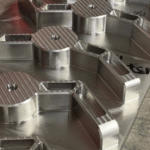
CNC milling involves using a rotating cutting tool to remove material from a fixed workpiece. The machine can move along multiple axes (up to 5 at Prototype Projects), allowing for complex geometries.

Typical applications include:

  • Housings
  • Brackets
  • Mounting plates
  • Parts with pockets, slots, or 3D contours

This method is ideal for components that require detailed features, flat surfaces, and complex 3D forms.

What is CNC Turning?

CNC turning works in the opposite way. In this process, the workpiece rotates at high speed while a stationary cutting tool shapes it. It’s best suited for cylindrical or symmetrical parts where the geometry is consistent around an axis.

Typical applications include:

  • Shafts
  • Spacers
  • Bushings
  • Threaded components

Turning is faster and more cost-effective than machining for the right kind of geometry.

Choosing the Right Process

The geometry of your part is usually the deciding factor. If your design features complex curves, flat faces, or varied depth pockets, CNC milling is the more suitable method. If the part is round, symmetrical, or has features like threads, turning is the better option.

It’s also worth considering:

Quantity: Turning can be quicker for higher volumes of cylindrical parts.

Material: Both methods support a wide range of metals and plastics, but some materials may machine better on one process than the other.

Tolerance and finish: Both offer excellent repeatability, but milling can offer finer detail for intricate features.

Design Considerations

When designing for CNC milling:

  • Avoid deep, narrow pockets that are difficult to reach with standard tools.
  • Use consistent wall thicknesses to prevent distortion.
  • Consider how the part will be fixtured during machining.

When designing for CNC turning:

  • Keep geometry symmetrical around the axis.
  • Avoid interruptions (e.g. cross-holes) in areas that require a smooth finish.
  • Factor in space for tool access during internal operations.

Working with an experienced prototyping partner means these considerations can be flagged early, saving time and reducing the risk of design changes later.

Why It Matters for Prototyping and Low-Volume Production

Making the right process choice can improve lead times, reduce costs, and result in better-functioning prototypes. We offer both CNC milling and CNC turning in-house, so we can advise on the most suitable method for your parts and often suggest design tweaks that make manufacturing more efficient without compromising performance.

Talk to us

If you’re unsure whether your design is better suited to CNC milling or turning, our team is here to help. We’ll review your drawings or CAD files and guide you toward the most efficient solution for your timeline, budget, and performance goals.

Contact us on 01763 249760 to discuss your requirements.

Ready to get started? Please click here to request a quote.

If you need 3D printed parts, use our Matrix platform to get an instant quote for SLS, SLA and DLP parts.
Recent Popular
Stainless Steel 304 vs 316 for CNC Machining

Stainless Steel 304 vs 316 for CNC ...

5 March 2026 Comments Off on Stainless Steel 304 vs 316 for CNC Machining: When Does the Upgrade Make Sense?
Aluminium 6082 vs 7075 for CNC Machining

Aluminium 6082 vs 7075 for CNC Machining

3 March 2026 Comments Off on Aluminium 6082 vs 7075 for CNC Machining

Large format SLA 3D Printing

Large-Format SLA 3D Printing: Design Considerations

24 February 2026 Comments Off on Large-Format SLA 3D Printing: Design Considerations

CNC Machining tolerance

Understanding CNC Machining Tolerances

21 January 2026 Comments Off on Understanding CNC Machining Tolerances
45 Years of Innovation at Prototype Projects

45 Years of Innovation at Prototype Projects

18 December 2025 Comments Off on 45 Years of Innovation at Prototype Projects
Applications and design tips for SLS: a guide

Applications and design tips for SLS: a ...

27 November 2019 0
Prototyping medical devices for patient contact

Prototyping medical devices for patient contact

22 September 2021 0
silicone tooling

LUMA-iD develops Buddy with silicone tooling

21 July 2022 0
CNC Machining and CNC Turning

Understanding the Difference Between CNC Milling and ...

15 April 2025 Comments Off on Understanding the Difference Between CNC Milling and CNC Turning for Better Design Choices
Modern Design and 3D Printing

Modern Design and 3D Printing

8 July 2025 Comments Off on Modern Design and 3D Printing

Comments are closed

Next Day Dispatch

Delivering Overnight Printing

Email: office@prototypeprojects.com
Tel: 01763 249760

Prototype Projects Ltd
Units 1&2, Greenfield
Royston,
Herts SG8 5HN

If you have questions about any aspect of our service, please contact us.


    UKAS
    Cert no. 11512-QMS-001
    Cert no. 11512-EMS-001
    EHAAT proud supporter
    Royston Business Awards - Prototype Projects

    Sign up to our Company and Industry newsletter

    Sign up here

    Prototype Projects is a family-run business specialising in 3D Printing, CNC Machining, Model Making and Vacuum Casting. Established in 1980, the company is located in Royston, Hertfordshire.

    Trustpilot - Prototype Projects

    About | Our team | Customers | Work with us

    CNC Machining

    CNC Turning
    CNC Milling
    CNC Low Volume Production
    CNC 3-Day
    CNC Materials
    CNC Finishing
    Production Speeds

    3D Printing

    SLS
    SLA
    Micro 3D Printing
    Digital Light Projection
    Filament 3D Printing
    3D Printing Materials
    3D Printing Finishing
    Production Speeds
    Matrix

    Injection Moulding

    Injection Moulding

    Other services

    Model Making
    Vacuum Casting
    Laser Cutting
    Inspection
    Low Volume Manufacturing

    Contact us

    Prototype Projects Ltd
    Units 1 &2, Greenfield
    Royston
    Herts SG8 5HN

    office@prototypeprojects.com
    01763 249760

    Find us

    What3Words: ///shows.formed.dispensed

    (C) 2026 - Prototype Projects | Terms | Privacy | Web Design by Indigo Ross

    Manage Consent
    To provide the best experiences, we use technologies like cookies to store and/or access device information. Consenting to these technologies will allow us to process data such as browsing behaviour or unique IDs on this site. Not consenting or withdrawing consent, may adversely affect certain features and functions.
    Functional Always active
    The technical storage or access is strictly necessary for the legitimate purpose of enabling the use of a specific service explicitly requested by the subscriber or user, or for the sole purpose of carrying out the transmission of a communication over an electronic communications network.
    Preferences
    The technical storage or access is necessary for the legitimate purpose of storing preferences that are not requested by the subscriber or user.
    Statistics
    The technical storage or access that is used exclusively for statistical purposes. The technical storage or access that is used exclusively for anonymous statistical purposes. Without a subpoena, voluntary compliance on the part of your Internet Service Provider, or additional records from a third party, information stored or retrieved for this purpose alone cannot usually be used to identify you.
    Marketing
    The technical storage or access is required to create user profiles to send advertising, or to track the user on a website or across several websites for similar marketing purposes.
    • Manage options
    • Manage services
    • Manage {vendor_count} vendors
    • Read more about these purposes
    View preferences
    • {title}
    • {title}
    • {title}