
- Home
- Model Making
- The Insider’s Guide to Model Making, Part 1
The Insider’s Guide to Model Making, Part 1
Model Making: an insider’s guide (part 1)
Do you know us because of our 3D printing services? Or our CNC machining, laser cutting or vacuum casting capability? If so, you might be surprised to learn that Prototype Projects started out in 1980 as a model making business and we still excel in this field.
This article is the first of a two-part series in which we will tell you everything you need to know about model making. While this first part explains what professional model making is, when it is useful and what it can achieve, the second part delves into the nitty-gritty of the workflow and technologies.
What is professional model making?
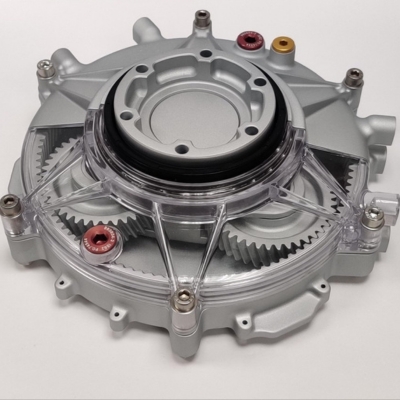
Professional model making can be described as a fusion of skills, techniques and technologies for the production of high-quality three-dimensional representations of objects. Our team of skilled model makers use their experience to create models from a very wide range of materials. Where necessary, they incorporate parts made using 3D printing, CNC machining, vacuum casting and laser cutting.
Depending on the customer’s requirements, a finished model might look identical to a production item or it could be functional to allow for handling trials or performance testing.
Whereas individual technologies such as 3D printing or CNC machining inevitably have their limitations, our model makers can achieve almost anything using carefully selected materials, techniques and technologies.
What are models used for?
We refer to four different categories of model, but the versatility of professional model making is such that some models fall outside these broad categories or, at other times, overlap two or more of them. Whatever your requirements, talk to us and we will create what you need.
- Design verification models: also known as ‘reality check’ models, these are typically produced in the early stages of a project to check the look and feel of a concept.
- Presentation models: these have the same look and feel as the finished product but not necessarily the same functionality. They might be handled by the customer and could be displayed at an exhibition, but we usually advise against them being handled by large numbers of people.
- Advanced prototype models: certain features are created with high accuracy so the models are suitable for functional testing and pre-manufacture production verification.
- Architectural models: this term covers not just scale models of buildings, but also structural engineering projects, large constructions, vehicles and engineering projects. Customers typically use architectural models for presentational and visualisation purposes.
Photorealistic rendering produces imagery of an exceptionally high quality and was invaluable during the pandemic lockdowns when project teams were unable to meet in person. However, since the lockdowns ended, there has been a surge in demand for physical models. Designers and other team members are appreciating how much more can be learnt from holding and manipulating a physical model, compared with viewing images on screen.
Which industries use model making?
Almost all industries producing physical items benefit from model making. Those that manufacture handheld products – such as medical devices and consumer electronics – are heavy users, but so are those where the product is larger but still involves human interaction. For example, the automotive and aerospace industries, larger medical/surgical equipment, consumer goods and even industrial products.
Models are also used widely in architecture, civil engineering, the rail industry, agricultural machinery, and industrial plant and equipment.
Not only can a model be a very useful tool for illustrating concepts or visualising products, it can also show how something works.
Models can be built as ‘cutaways’ or with clear or specially coloured components; or lighting can be incorporated to indicate, for example, changes in temperature or pressure. If a picture is worth a thousand words, just think how many a dynamic three-dimensional model is worth!
Aside from in manufacturing, model making is also employed in the creative industries. For instance, it is ideal for providing props for movies, theatre productions and advertising.
How big or small can models be made?
Models are made to a scale that best serves the model’s purposes. A handheld device, therefore, will be usually made full size, whereas a tiny product could be modelled at a larger scale to aid visualisation. Similarly, models of buildings, structures or large equipment are scaled down so they serve to illustrate what they need to without taking up too much space or becoming difficult to transport.
In reality, it is unlikely that we would produce a model smaller than a thimble or larger than a domestic dishwasher. Of course, there can be exceptions!
The complete package
Our model makers take great care building customers’ models, so it is hardly surprising that we also make cases for display and transportation purposes. These might be for displaying a model temporarily at an exhibition or conference, or permanently in a boardroom, showroom or reception. If required, cases can incorporate lighting, information panels, real or model props to contextualise the product, or almost anything else.
For transportation, we provide protective cases to suit the model and mode of transport. These range from shadow foam cases for small models, through to fully fitted flight cases for large models.
Service levels, quotes and timescales
Unlike 3D printing and CNC machining, we do not have Express, Standard and Economy service levels. And nor do we have an online ordering facility for model making. Every model making project is different, so we only prepare a quote after we have been briefed, and that quote will include the lead time.
Typical projects
We have built so many different models over the years that it is hard to identify ‘typical’ projects. Nevertheless, here are three examples of what our model making team does.
Tracca GPS tracking collars for pets
The customer needed prototypes that were robust enough to be worn by a dog for 24 hours per day. We combined vacuum casting with traditional model making skills to produce functional prototypes for thorough testing in ‘real world’ situations.
BounceLite
A photographer-turned-inventor had designed a novel photographic flash modifier. We built six prototypes using a mix of SLA for rigid parts, vacuum casting for elastomeric parts and hand finishing. The resultant models looked, felt and behaved as production items. Not only were they suitable for testing, but the customer also presented them at a key European trade fair.
Laparoscopic suturing device
A design consultancy was working with a client to develop a suturing device for use in keyhole surgery. We manufactured high-precision prototypes incorporating 3D printed and CNC machined parts, all assembled and finished. These enabled surgeons to test the functionality and evaluate the design prior to manufacture.
Coming next…
In the second part of this article, we look in detail at how our model making team works and the technologies used.
Talk to us
If you need model making services or would just like to have a chat about your project, talk to us on 01763 249760.
PSLA vs SLA vs DLP | Resin ...
18 March 2026 Comments Off on PSLA vs SLA vs DLP | Resin 3D Printing Comparison
New Larger CNC Billet Expands 3-Day and ...
10 March 2026 Comments Off on New Larger CNC Billet Expands 3-Day and Production Capacity
Stainless Steel 304 vs 316 for CNC ...
5 March 2026 Comments Off on Stainless Steel 304 vs 316 for CNC Machining: When Does the Upgrade Make Sense?
Aluminium 6082 vs 7075 for CNC Machining
3 March 2026 Comments Off on Aluminium 6082 vs 7075 for CNC Machining
Large-Format SLA 3D Printing: Design Considerations
24 February 2026 Comments Off on Large-Format SLA 3D Printing: Design Considerations

Understanding the Difference Between CNC Milling and ...
15 April 2025 Comments Off on Understanding the Difference Between CNC Milling and CNC Turning for Better Design Choices